How a Brain Injury Lawyer Denver Investigates Serious Injury Cases
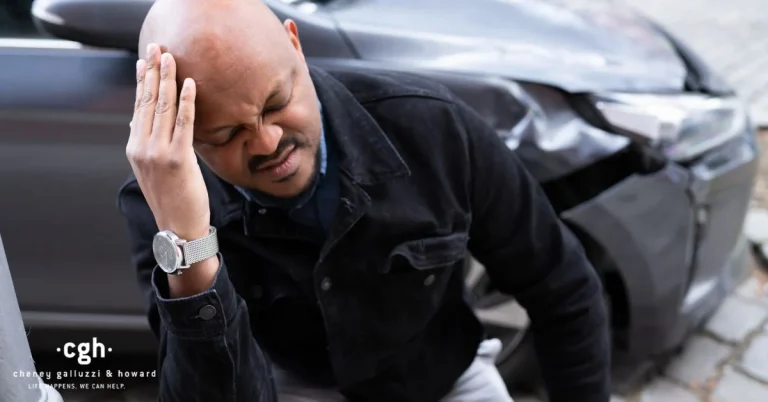
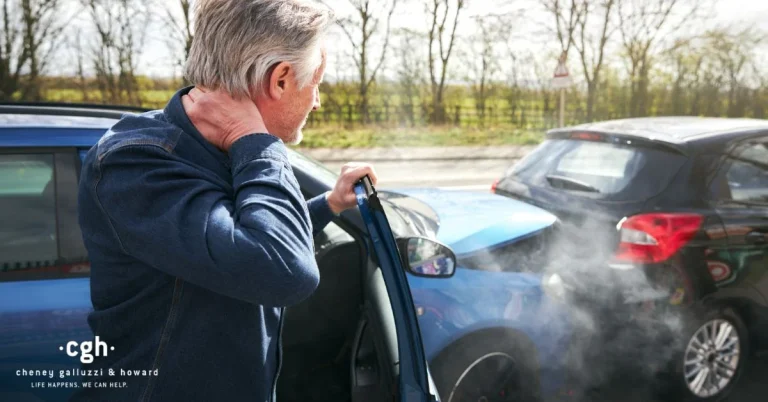

A serious brain injury case rarely arrives neatly packaged. It usually begins in fragments, a dazed client, a frightened spouse, an emergency room record that says "head trauma," and a stack of unanswered questions. What exactly happened? Why are the symptoms getting worse instead of better? Who saw the injured person before the crash, fall, or impact, and who can describe the changes afterward? Those questions drive the early investigation, and in a brain injury case, the answers matter more than most people realize.
A broken arm often shows up clearly on an X-ray. A brain injury can be far less cooperative. Some clients lose consciousness at the scene. Others never do. Some have obvious deficits within hours. Others return to work too soon, only to discover weeks later that concentration is shot, memory is unreliable, sleep is broken, and irritability has become a daily problem. That gap between injury and proof is where strong legal investigation makes a real difference.
A Brain Injury Lawyer Denver handling a serious case does much more than collect hospital bills and file paperwork. The job is to build a factual record that connects the incident, the medicine, the lived impact, and the legal responsibility of the party who caused the harm. In Denver, that often means investigating collisions on I-25 and I-70, construction accidents, ski area incidents, unsafe premises, workplace trauma, and falls complicated by weather, elevation, or delayed treatment. The local context matters because the facts of place often shape the facts of liability.
The first challenge is defining the injury correctly
People use the phrase "brain injury" loosely, but the legal and medical work requires precision. A concussion, a complicated mild traumatic brain injury, a diffuse axonal injury, a skull fracture with intracranial bleeding, an anoxic injury after delayed oxygen loss, these are very different injuries with different patterns of proof and long-term consequences.
The first task is not to exaggerate the diagnosis. It is to understand it. Lawyers who handle these cases carefully will want to know what providers actually documented in the first hours and days after the trauma. Was there a Glasgow Coma Scale score? Was there loss of consciousness, confusion, amnesia, vomiting, seizure activity, unequal pupils, slurred speech, or abnormal imaging? Did emergency responders note disorientation at the scene? Did family members observe a dramatic personality shift that never made it into the chart?
That distinction matters because defense lawyers and insurers often seize on vagueness. If the records say "possible concussion" in one place, "headache" in another, and nothing at all about cognition in a third, they will argue the case is built on hindsight. A seasoned lawyer does not treat that as a reason to give up. It is a reason to investigate harder.
Why the scene investigation starts early
Serious injury cases can weaken quickly if physical evidence disappears. Surveillance footage gets overwritten. Vehicles are repaired or sold. A spill gets cleaned. A stair tread gets replaced. A hard hat disappears from a job site trailer. Witnesses move, forget, or become less willing to talk.
That is why the early investigation often feels urgent. In a Denver traffic case, counsel may move quickly to inspect vehicle crush damage, retrieve event data recorder information, obtain photographs from towing yards, and map sight lines at the intersection. In a fall case, the lawyer may want same-week photographs showing snowpack, ice melt, lighting, handrail conditions, warning signage, and camera placement. In a construction case, preserving incident reports, subcontractor communications, and safety meeting records can be just as important as medical records.
When a brain injury is involved, the mechanics of impact matter. A rear-end collision at a seemingly modest speed may still produce a forceful rotational event, especially if the head strikes the window, steering wheel, pillar, or seat frame. A fall from standing height can cause devastating intracranial bleeding in an older adult. A pedestrian struck in a crosswalk may show both orthopedic trauma and subtle cognitive decline that traces back to secondary head movement, not just the visible laceration.
The lawyer is not investigating in the abstract. The point is to answer a concrete question: how did the brain get injured, and what evidence can prove that mechanism to skeptical outsiders months or years later?
Medical records tell only part of the story
Hospital records are essential, but they are not self-explanatory, and they are rarely complete in the way a legal case needs them to be. Emergency departments are designed to stabilize, not to narrate. If the patient is alive, discharged, and not showing a bleed on CT, the chart may understate what happened next.
Many traumatic brain injuries, especially milder ones, do not reveal themselves fully during the first visit. The person goes home, sleeps badly, misses words, develops headaches, cannot tolerate noise, forgets appointments, and lashes out at people they love. They may return to urgent care, then to primary care, then to neurology, then to vestibular therapy, speech therapy, occupational therapy, neuropsychology, and counseling. A reliable investigation has to connect that chain.
A good legal file in this kind of case usually grows outward from the initial emergency records into every corner of the treatment history. That may include ambulance records, ER nursing notes, trauma consults, radiology images, follow-up evaluations, therapy notes, pharmacy history, neuropsychological testing, work restrictions, and school accommodation records. What matters is not just the diagnosis code. It is the pattern.
For example, a therapist's note that a client can no longer follow multistep instructions may become powerful when paired with payroll records showing a drop in performance, emails from a supervisor documenting missed deadlines, and testimony from a spouse who now handles every household bill because the client can no longer manage simple budgeting without confusion.
Witnesses often explain what the scans do not
One of the most important parts of a serious brain injury investigation is developing witness testimony that captures change over time. Imaging can be normal and the injury can still be real. That is frustrating for juries unless someone explains the before-and-after picture in specific, believable terms.
The strongest witnesses are often not the loudest ones. A coworker who says, "He used to run the scheduling board for three crews and never forgot a detail, now he asks the same question three times before lunch," may do more for the case than a dramatic but vague statement from a distant friend. Teachers, coaches, supervisors, project managers, siblings, and adult children can all be crucial because they have a baseline.
In practice, that means the lawyer will often spend significant time interviewing people who knew the client before the event. Not just to ask whether the person seems "different," but to pin down examples. Did they stop driving at night? Miss turns on familiar roads? Lose the ability to read dense material? Quit coaching because the noise in the gym triggered headaches? Withdraw from family gatherings because they could no longer track conversation?
These details are not decoration. They are the daily expression of the injury.
The most useful evidence tends to be concrete
A serious brain injury case becomes more persuasive as it becomes more specific. General claims about pain and suffering are easy to dismiss. Detailed proof is harder to argue with.
Some of the evidence a Brain Injury Lawyer Denver may pursue includes:
- Scene photographs, measurements, and surveillance footage
- Ambulance reports, ER records, imaging, and specialist notes
- Employment files, wage records, and performance documentation
- Testimony from family, coworkers, and treating providers
- Expert analysis from neurology, neuropsychology, rehabilitation, or life care planning
Even within those categories, judgment matters. More records do not automatically mean a stronger case. A thousand pages of duplicative charting can bury the most important facts. What experienced lawyers try to build is a coherent record, one that shows the event, the injury, the symptoms, the treatment course, and the functional losses without asking a jury to guess.
Neuropsychological testing can help, but timing matters
Clients often hear that neuropsychological testing is the gold standard in a brain injury case. It can be extremely useful. It can also be misunderstood.
Testing can help measure attention, memory, executive functioning, processing speed, and other cognitive domains. It can identify patterns consistent with traumatic brain injury and rule out simpler explanations. But the timing of that testing matters. Too early, and the client may still be in an acute recovery phase. Too late, and the defense may argue that unrelated stress, depression, sleep disruption, or life events have muddied the picture.
The right testing also depends on the right referral. In real cases, this is not just about obtaining a report with the right diagnosis. It is about working with legitimate treating providers and, when needed, qualified experts who can explain limitations as well as findings. A thoughtful neuropsychologist will https://miloqial182.tearosediner.net/what-evidence-does-a-brain-injury-lawyer-in-denver-need usually discuss effort testing, confounding factors, educational background, preexisting conditions, and whether the presentation fits known injury patterns. That transparency often gives the opinion more credibility.
Lawyers who mishandle these cases sometimes oversell normal or borderline findings. That can backfire badly. Juries tend to punish exaggeration. It is far better to present a measured case: this is what the testing shows, this is what it does not show, and this is how it fits with the broader clinical picture.
Preexisting conditions are not the end of the case
Many injured people are not medically pristine before trauma. They may have migraines, anxiety, ADHD, prior concussions, depression, sleep apnea, substance use history, or age-related cognitive concerns. Insurance carriers love those facts because they offer an alternative story.
A careful investigation does not ignore that background. It organizes it. If a client had migraines twice a year before a crash and then develops headaches four days a week afterward, the issue is not whether headaches existed before. The issue is degree, frequency, and functional effect. If a client had mild anxiety but managed a demanding sales job for ten years before a fall, then cannot tolerate multitasking or customer conflict afterward, the preexisting condition does not erase the change.
This is where old records, school records, employment records, and family testimony become especially valuable. A lawyer may want to see prior neurology care, prior medication history, baseline academic performance, or earlier imaging if any exists. The point is not to hunt for bad facts. The point is to know them before the defense does and to place them in context.
Liability and damages have to be built at the same time
In every injury case, there are really two stories that must be proven. The first is liability, who caused the incident and how. The second is damages, what the injury took from the person. Brain injury cases fail when one side is developed and the other is neglected.
A terrible injury does not create liability where none exists. Likewise, clear fault does not guarantee fair compensation if the lasting effects are poorly documented. Strong case preparation usually moves on both tracks from the start.
Take a commercial truck collision outside Denver. Liability may depend on hours-of-service records, onboard data, maintenance history, braking distance, lane position, weather, and the driver's phone use. Damages may depend on whether the client can return to heavy work, whether fatigue and cognitive slowing affect safe driving, and whether a spouse has become an unpaid caregiver. The two tracks intersect because the seriousness of the collision may support the medical mechanism, while the medical consequences explain why the case value is far greater than the visible property damage alone might suggest.
Experts are chosen for fit, not prestige
There is a common mistake in serious injury litigation, hiring the biggest name available without asking whether that expert fits the facts. A persuasive expert is not just accomplished. The expert must be able to explain this injury, in this plaintiff, from this event, in language a jury can actually follow.
That may mean a neurologist for diagnosis, a neuroradiologist for subtle imaging interpretation, a neuropsychologist for cognitive testing, a vocational expert for employment loss, and a life care planner for future needs. Not every case needs all of them. In some cases, bringing too many experts signals overreach. In others, failing to retain the right specialist leaves obvious gaps.
The lawyer's role includes testing expert opinions before the other side does. Can the doctor explain why symptoms persisted despite a negative CT? Can the vocational expert defend assumptions about work life expectancy? Can the life care plan distinguish likely needs from speculative ones? Serious cases demand that level of internal challenge.
Damages are not limited to medical bills
Medical bills often get attention because they are visible and easy to total. They are also rarely the whole case. In a substantial brain injury matter, the largest losses may involve earning capacity, home support, future treatment, and the erosion of independence.
The hardest losses to quantify are often the most human ones. A parent who can no longer help with homework. A project manager who can no longer juggle deadlines. A cyclist who no longer trusts their balance. A spouse who now handles transportation, medication reminders, scheduling, and financial tasks because the injured person becomes overwhelmed by ordinary demands.
Investigating these losses takes work. Lawyers may obtain tax returns, payroll records, personnel evaluations, disability paperwork, leave records, and pension information. They may also gather calendars, journals, text messages, or home videos that show change over time. In one kind of case, a pre-injury video of a client coaching youth baseball may have real evidentiary value when contrasted with post-injury testimony about noise sensitivity and cognitive fatigue.
Denver-specific facts can shape the investigation
Local conditions influence how serious injury cases are investigated. Denver cases often involve weather transitions, snow melt, ice, mountain travel, high-speed corridors, and active construction zones. Those conditions can affect scene preservation and liability analysis.
In a premises case, for example, whether ice formed from a recurring drainage problem may matter more than whether there was snow that morning. In a highway collision, grade, visibility, traffic flow, and commercial route patterns can become important. In recreational injury cases, altitude, fatigue, and delayed symptom recognition can complicate both treatment and proof.
Jurors drawn from the Denver metro area also tend to understand some local realities instinctively. They know winter footing can change by the hour. They know traffic around interchanges can be aggressive and fast. They know outdoor activity injuries do not always happen in remote wilderness settings. A lawyer who investigates locally and concretely can often present those facts with more credibility than someone relying on generic assumptions.
Cases often turn on what happens in the first few months
The first few months after a suspected brain injury are often a proving ground. Not because every case must be fully developed then, but because early choices shape the evidence later.
Several practical issues come up repeatedly:
- Gaps in treatment that allow the defense to argue symptoms resolved
- Casual social media posts that seem inconsistent with claimed limitations
- Delayed specialist referrals that postpone diagnosis and rehabilitation
- Incomplete reporting to employers, schools, or insurers
- Family members who notice major changes but never document them
None of those issues automatically destroys a case. Real people miss appointments, try to push through work, and put a smiling photo online during a difficult month. But each issue requires explanation, and explanations are easier to present when counsel identifies them early instead of reacting late.
That is one reason experienced lawyers often encourage clients to keep practical records, not dramatic diaries, but straightforward notes about headaches, fatigue, missed work, therapy tolerance, and changes in daily function. Those notes can refresh memory months later and help connect the treatment record with lived reality.
Settlement value depends on proof, not labels
A file stamped "TBI" does not automatically become a high-value case. Defense counsel and insurers look for durability, consistency, and corroboration. They ask whether symptoms match the mechanism. Whether the treatment course makes sense. Whether the client worked after the event and how long. Whether objective testing supports subjective complaints. Whether preexisting issues provide a more likely explanation.
That scrutiny is not surprising. Brain injury cases can involve significant exposure, especially when the injured person is young, highly compensated, or permanently limited. The investigation has to be ready for that level of resistance.
The strongest cases usually share certain features. The mechanism is well documented. Early records reflect confusion, disorientation, or other neurological signs. Follow-up care is timely and coherent. The client's deficits are described by credible third parties. Work loss is documented. Experts are disciplined and consistent. Most important, the case is presented honestly, without trying to turn every symptom into catastrophic impairment.
That last point matters. Some serious brain injury cases are catastrophic. Others are life-changing without being total. A professional presentation leaves room for that nuance. Juries tend to respect it, and insurers often recognize it too.
What clients should expect from a thorough investigation
Clients sometimes assume that hiring counsel means the legal team will simply request records and wait for a settlement offer. Serious brain injury work is more demanding than that. It often involves repeated witness contact, careful chronology building, medical review, expert coordination, insurance analysis, and strategic decisions about when a case is mature enough to negotiate and when it needs to be filed.
For the injured person and family, that process can feel slow. It can also be emotionally difficult, because the investigation requires revisiting a version of life that no longer exists. Yet that before-and-after picture is exactly what allows the case to be understood by outsiders.
A good Brain Injury Lawyer Denver is not just looking for dramatic evidence. The lawyer is looking for reliable evidence. The ER note that captured confusion. The coworker who noticed errors no one expected. The therapist who tracked functional setbacks over months. The imaging that was subtle but meaningful. The wage records that show a sharp drop. The spouse who can explain, calmly and specifically, how ordinary life changed after the injury.
That is how serious brain injury cases are investigated properly, piece by piece, until the record reflects the truth of the injury rather than the shorthand version that fit into a discharge summary. When the work is done well, the case no longer depends on assumptions or sympathy. It stands on proof.
CGH Injury Lawyers
Address: 2701 Lawrence St Ste 201, Denver, CO 80205
Phone number: +17206698062
FAQ About Brain Injury Lawyer Denver
What to avoid after brain injury?
After a brain injury (such as a concussion or traumatic brain injury), protecting your brain from physical, mental, and chemical stress is critical to proper healing.
What is a brain injury lawyer?
A brain injury lawyer (or Traumatic Brain Injury / TBI lawyer) is a personal injury attorney who represents individuals who have suffered concussions, contusions, hemorrhages, or other forms of brain trauma caused by someone else's negligence, recklessness, or intentional harm.
Can traumatic brain injury be cured?
A traumatic brain injury (TBI) cannot be strictly "cured" in the sense of reversing permanent cell death or restoring the brain to its exact pre-injury state. However, the brain possesses a remarkable ability to heal and adapt.